· 6 min read
What Mental Health First Aid Can—and Cannot—Do in the Workplace
Mental Health First Aid can strengthen early, compassionate support at work. Its value is greatest when it forms part of a wider approach to wellbeing, safeguarding, management practice and professional care.
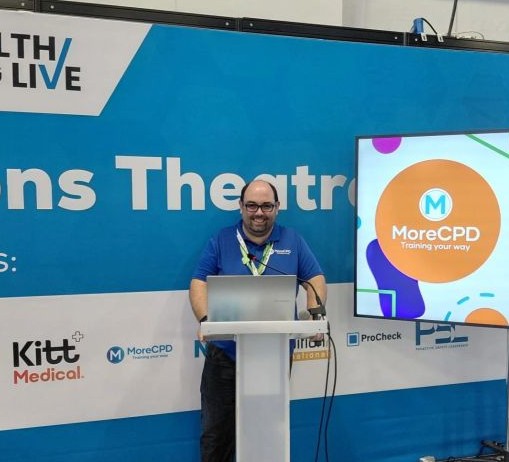
Matt Streuli
Mental Health First Aid & Wellbeing Instructor · Advocate · Performer

Mental Health First Aid can be a constructive part of a workplace wellbeing approach. It can help colleagues recognise when somebody may be struggling, start a sensitive conversation and consider what support may be appropriate. Having a diverse network helps there to be an approachable person for everyone but also enables peer support with your MHFAiders. That support and earlier intervention matters. Yet an effective Mental Health First Aid network is not a complete mental health service, nor should it be treated as one. Organisations gain most when they are clear about both its potential and its limits.
What Mental Health First Aid can do
Mental Health First Aid training can improve confidence in recognising signs of distress and in responding with care. In the Adult Mental Health First Aid course delivered through MoreCPD, participants explore mental health, recognising signs of distress, offering support and guiding someone towards further help.
In a workplace setting, this can support a more open culture. A colleague who knows how to listen without judgement may make it easier for someone to speak up earlier. That does not mean every conversation will be straightforward, but it can reduce the sense that a person must manage alone.
A well-supported network can also provide visible points of contact. Some people may find it easier to approach a trained peer than to begin with a manager or a formal service. This can be particularly helpful where teams are spread across sites, work different shifts or have limited day-to-day contact with central wellbeing functions.
Mental Health First Aiders can contribute to prevention too. They may notice recurring concerns, encourage discussion of workplace pressures and signpost people towards relevant internal or external support. However, any themes gathered in this way should be handled carefully, with attention to privacy and appropriate routes for raising organisational issues.
What it cannot do
Mental Health First Aid is not clinical assessment, counselling, diagnosis or treatment. A Mental Health First Aider should not be expected to decide what condition a colleague has, provide therapy, investigate concerns or take on responsibility that belongs with health professionals, managers, HR, safeguarding leads or emergency services.
It is also not a substitute for sound management. If workload, behaviour, staffing, organisational change or working conditions are contributing to distress, a network of volunteers cannot solve those underlying issues alone. Leaders still need to listen, act on concerns and make reasonable, well-informed decisions within the organisation’s policies and responsibilities. MHFAiders can be a pulse check and a way to re-engage your teams but there is no silver bullet.
Nor should Mental Health First Aiders become an informal crisis service. They need clear escalation routes for urgent situations, alongside boundaries around availability, confidentiality and the scope of their role. Without these, well-intentioned people may feel pressure to offer support beyond their training or capacity and you risk harming your MHFAiders. BSI has launched new standards around suicide prevention and coaching your MHFA network will help your business meet those standards.
There is an important distinction between listening supportively and promising secrecy. Colleagues should understand that information may need to be shared when there is a serious concern about someone’s safety, or when safeguarding and organisational procedures require action. The precise process is communicated clearly throughout the two day MHFA course and help to demonstrate why 'wellbeing champions' who have a 30 minute quick click training might be at risk of harm or causing more harm.
Building a network that is safe and sustainable
Training is a starting point, not the whole programme. Organisations should plan how Mental Health First Aiders will be introduced, supported and connected to wider arrangements.
Useful foundations include:
- A clear role description. Explain what Mental Health First Aiders are there to do, what they are not there to do and how colleagues can contact them.
- Visible escalation pathways. Identify appropriate routes for urgent wellbeing concerns, safeguarding matters, employee support, occupational health, HR advice and emergency situations.
- Regular support for the network. Opportunities to debrief, refresh knowledge and discuss boundaries can help volunteers look after their own wellbeing as well as that of others. A coffee morning with colleagues in EDI, OD and HR is ideal.
- Manager awareness. Managers do not need to delegate their responsibilities to Mental Health First Aiders. They should understand how the network fits alongside compassionate management and existing people processes. They are allies.
- Confidentiality and information handling. Set expectations that are realistic, proportionate and consistent with organisational policy.
- Review and learning. Invite feedback from Mental Health First Aiders and colleagues, then use it to improve communication, support routes and training.
In larger or more complex organisations, coordination is especially important. A network may need named leads, a simple way to maintain contact details, planned meetings and links with wellbeing, learning, safeguarding and people teams. The aim is not to make the structure bureaucratic; it is to ensure volunteers are not isolated and that colleagues can find the right help.
A wider culture of care
Mental Health First Aid is most effective when it sits within a wider culture of respect, inclusion and practical support. Staff need to know that speaking about wellbeing will be met with care, while leaders need systems that allow them to respond appropriately. If your workplace culture is toxic and staff are leaving quicker than you can recruit, then MHFA could be a catalyst for change; but again it is not the silver bullet.
The central question is not simply, “How many Mental Health First Aiders do we have?” It is, “What happens when somebody asks for help?” A credible answer includes kind conversations, clear boundaries, reliable signposting, responsible management and access to professional support where needed.
Mental Health First Aid can play a valuable role in that answer. It is a bridge towards support, not the destination itself.
_
I'd love to meet up, either in person or via Zoom, to discuss who our training offer could support you. MoreCPD scales with you from sole traders to small charities, schools and PTAs and local councils, through to multi-site and multi-national businesses. Find out more about MHFA courses with me or the relevant e-learning I help to produce using the link before or contact me through my website: https://morecpd.com/mental-health-first-aid